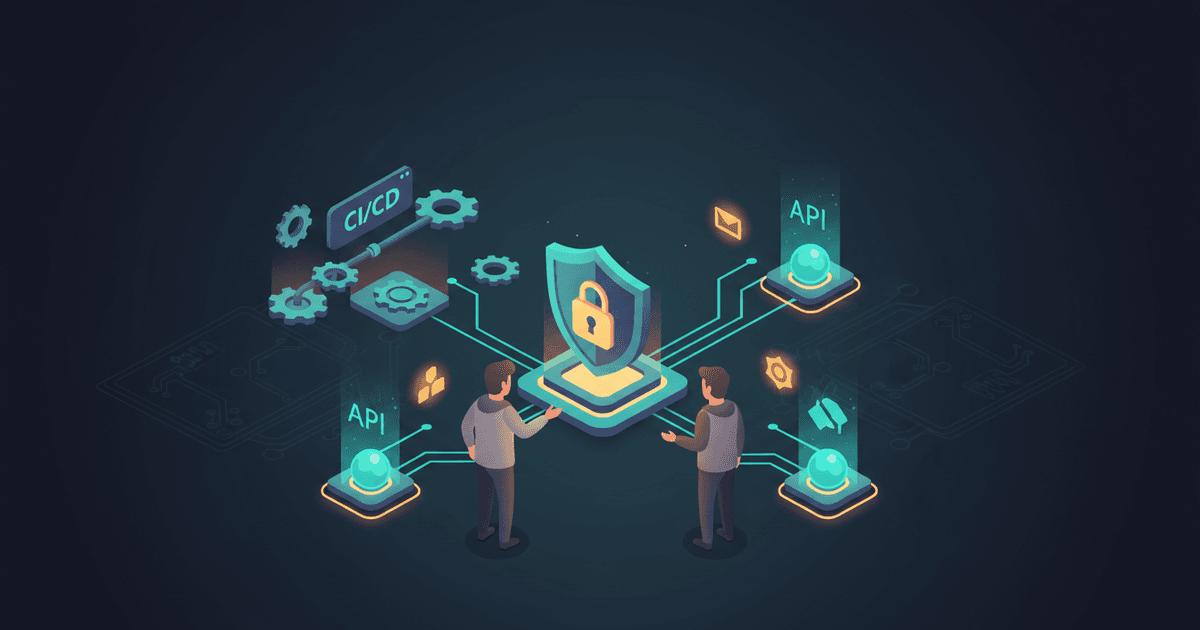
Dynamic Application Security Testing (DAST) for APIs helps teams find vulnerabilities early in the development lifecycle. For enterprises, however, finding issues is only half the job—they must be tracked, prioritized, and remediated at scale. This article explains how to integrate API DAST results from CI/CD into central vulnerability management systems so security teams get a single view of risk and a repeatable path to fix.
The Gap Between CI/CD DAST and Enterprise Vulnerability Management
Continuous Integration and Continuous Delivery (CI/CD) have changed how software ships, and integrating DAST into the CI/CD pipeline is a practical way to shift security left. Developers get fast feedback on regressions before release. That works well until findings stay trapped in build logs, pipeline artifacts, or a scanner dashboard that only the AppSec team checks.
Enterprise vulnerability management systems (VMS) are built to aggregate risk across the organization—network scanners, static analysis, penetration tests, and more. When API DAST results never reach that central system, they are easy to overlook, hard to prioritize against other findings, and inconsistent to remediate. The result is a fragmented posture and slower closure of critical API issues.
Without a bridge between pipeline DAST and your VMS, critical API vulnerabilities may never enter the workflow your security and engineering teams already use to assign, track, and verify fixes.
Benefits of Integrating API DAST Findings into Vulnerability Management
Connecting API DAST tools with enterprise vulnerability management delivers several concrete advantages:
- Centralized visibility: One place to see API findings alongside other sources, instead of siloed scanner UIs.
- Better prioritization: Combine DAST severity with VMS context—asset criticality, data classification, exposure—to focus on what matters most.
- Streamlined remediation: Open tickets in Jira, ServiceNow, or your issue tracker from the same queue your teams already work from, reducing manual copy-paste between tools.
- Compliance and reporting: Auditors and leadership get a single record of findings, owners, and remediation status instead of reconciling exports from multiple scanners.
Done well, integration lowers overall risk, saves security team time, and gives stakeholders a clearer picture of API exposure over time.
Common Integration Challenges and How to Overcome Them
The benefits are clear, but integration is rarely plug-and-play. Teams commonly hit these obstacles:
- Inconsistent data formats: Each DAST tool and VMS may use different fields, severities, and identifiers. You often need mapping or transformation before import.
- Tool sprawl: Large enterprises run many security products; maintaining one-off integrations for each pipeline and scanner does not scale.
- False positives and noise: Unfiltered DAST output can flood the VMS with low-value alerts and erode trust in the process.
- Authentication and authorization: API credentials, webhook secrets, and least-privilege access between systems must be designed deliberately—not bolted on after the fact.
Practical mitigations: Use REST APIs and webhooks for automated transfer instead of manual exports. Add a thin middleware layer when field mapping is non-trivial. Filter by severity, confidence, and environment before sending findings upstream. Document auth flows and rotate credentials on the same schedule as other production integrations.
Practical Strategies for Seamless Integration
Choose an approach that fits your toolchain, team skills, and how real-time you need updates to be:
- API-driven integration: Pull scan and alert data programmatically—Scryn exposes REST APIs for scans, alerts, and exports—and push normalized records into your VMS or aggregation layer on a schedule or after each pipeline run.
- Webhooks for timely updates: Configure webhooks when a scan completes or a new high-severity alert appears so downstream systems (ticketing, SIEM, or a custom receiver) can react without polling.
- Standardized interchange formats: Prefer tools that export SARIF or structured JSON so parsers stay stable across releases. Vulnerability aggregation platforms such as DefectDojo can also act as a normalization hub before data reaches your primary VMS.
- Vendor connectors: Some DAST and VMS products ship pre-built connectors; use them when they cover your fields and severity model to avoid custom glue code.
- Custom scripting: For unique workflows, small scripts in CI can transform pipeline artifacts and POST them to your VMS API. Higher maintenance, but full control over mapping and deduplication rules.
Most mature programs combine two or more of these—for example, SARIF export in CI plus webhooks for critical findings—rather than relying on a single path.
Best Practices for an Effective Feedback Loop
Integration is not just data movement; it should reinforce a continuous API security feedback loop:
- Automate end to end: Trigger scans from CI/CD, push results to the VMS, and create tickets without manual steps wherever possible.
- Define clear ownership: Document who triages, who fixes, and who verifies closure for API findings—same as you would for any other vulnerability class.
- Tune for relevance: Suppress or downgrade known noise and environment-specific false positives so teams focus on actionable risk instead of alert fatigue.
- Review and refine regularly: Check whether deduplication works, mean time to remediate is improving, and severity mapping still matches how your organization prioritizes API risk.
- Close the loop with developers: Surface relevant findings in developer workflows—Jira, Slack, or pull-request comments—so remediation happens in context and supports a security-aware engineering culture.
Run regression DAST scans after fixes land to confirm issues stay closed and new changes do not reintroduce the same flaws.
Conclusion
Running DAST in CI/CD is a strong foundation for catching API vulnerabilities early. Enterprise value comes when those findings flow into centralized vulnerability management—prioritized, assigned, tracked, and reported like every other class of risk.
Scryn's APIs, alert exports, and webhooks are built to fit this pattern: scan from the pipeline, normalize what matters, and feed the systems your security and platform teams already run. Moving beyond isolated scan reports is how API security becomes measurable, repeatable, and auditable at scale.
Visit scryn.cloud to see how Scryn supports API security testing and integration with your vulnerability management workflow.